
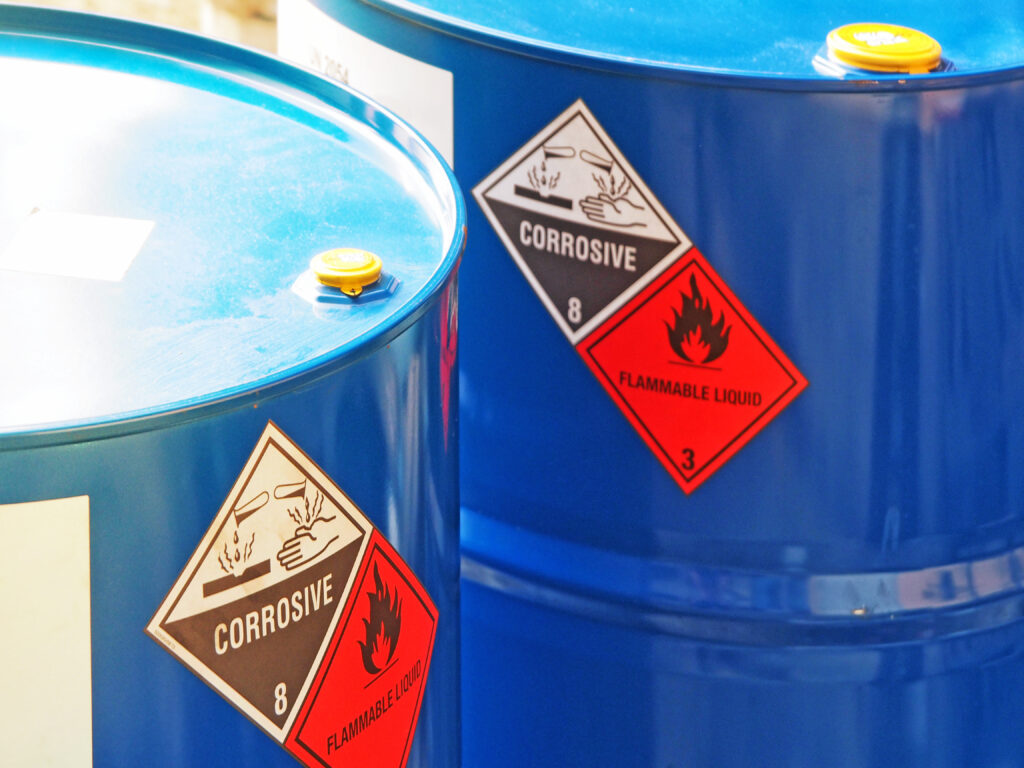
If your business produces hazardous waste, you have a legal responsibility to manage it properly.
That doesn’t just mean arranging a collection when your containers are full. From the moment hazardous waste is produced, you’re responsible for making sure it’s stored safely, collected by a registered waste carrier and taken to an authorised facility.
Whether you operate a garage, factory, warehouse, healthcare practice or construction site, understanding the rules can help you avoid unnecessary costs, protect your staff and remain compliant.
What Is Hazardous Waste?
Hazardous waste is any waste that could be harmful to people or the environment if it’s not managed correctly.
Some waste is always hazardous, while other materials need to be assessed before they’re classified.
Common examples include waste oil, paint and solvents, aerosols, batteries, chemicals, clinical waste, fluorescent tubes and Waste Electrical and Electronic Equipment.
Other materials, such as asbestos and waste containing persistent organic pollutants, need particularly careful handling. Wastege provides specialist support for both asbestos disposal and POPs waste.
If you’re ever unsure, don’t guess. A professional waste evaluation can help identify the waste correctly and determine the right disposal route.
What Does the Law Actually Require?
The rules around hazardous waste can seem complicated, but most businesses have the same basic responsibilities.
You must:
- Store hazardous waste safely.
- Keep different waste streams separate where necessary.
- Prevent leaks, spills and pollution.
- Use a registered waste carrier.
- Make sure your waste is taken to an authorised treatment or disposal facility.
- Keep the correct paperwork.
These responsibilities don’t end once the waste leaves your site. Under your Duty of Care, you’re expected to take reasonable steps to make sure your waste is handled properly throughout its journey.
Using an experienced hazardous waste management company can make this process much easier, particularly if you produce several different waste streams or require regular collections.
Storing Hazardous Waste Correctly
Many compliance issues start long before collection day.
Hazardous waste should be stored in suitable containers that are appropriate for the material being held. Containers should be secure, clearly identified and protected from accidental damage.
Depending on the type and volume of waste, this could include drums, IBCs, secure waste safes or suitable skips and bins.
Different waste streams should not be mixed unless they’re intended to be. Mixing waste can make disposal more expensive and may create further safety risks.
If you produce hazardous waste regularly, it’s also worth reviewing your storage arrangements to make sure they still suit the volume and type of waste generated by your business. Wastege can also arrange the supply of suitable waste containers where required.
Preventing Spills and Pollution
Businesses must take reasonable steps to prevent hazardous materials from escaping into the surrounding environment.
Storage areas should be checked regularly for signs of leaks or damage. Containers should be kept away from drains, watercourses and areas where they could be hit by vehicles or machinery.
Where a spill does happen, it needs to be contained quickly and managed safely. Wastege provides a specialist spill response service for businesses dealing with accidental releases, contaminated absorbents and affected waste materials.
Sites with fuel storage areas, bunds or interceptors may also need planned maintenance. Services such as bund cleaning and interceptor cleaning can help reduce the risk of pollution and keep site infrastructure working effectively.
Choosing the Right Waste Carrier
Not every waste carrier is equipped to deal with hazardous waste.
Before arranging a collection, you should check that your chosen provider is properly registered and that the waste will be taken to a facility authorised to receive it.
The contractor should also be able to provide clear information about how the waste will be transported, treated and documented.
This protects your business and helps demonstrate that you’ve met your legal responsibilities.
What Paperwork Do You Need?
Keeping accurate records is an important part of hazardous waste compliance.
Depending on the type of waste, this may include:
- Hazardous waste consignment notes.
- Waste classification records.
- Laboratory analysis where required.
- Collection and disposal records.
These documents provide an audit trail showing what waste was removed, who collected it and where it was taken.
Your waste contractor should help make sure the correct documentation is completed, but the responsibility still sits with your business to keep appropriate records.
What Happens If You Get It Wrong?
Failing to manage hazardous waste correctly can lead to enforcement action, financial penalties or prosecution.
Problems often arise because waste has been classified incorrectly, placed in an unsuitable container or passed to a contractor without the right permissions.
Poor storage can also lead to leaks, contamination and expensive clean-up work.
The safest approach is to identify the waste early, store it properly and use a specialist contractor who can explain what documentation and disposal route are required.
How Wastege Can Help
Wastege works with businesses across the UK to make hazardous waste compliance more straightforward.
Whether you need a one-off collection, regular scheduled services or advice on an unusual waste stream, the team can help determine the most suitable solution.
Wastege can arrange compliant collection and disposal, provide appropriate containers and support businesses with more complex industrial requirements.
Alongside hazardous waste collection, Wastege also provides services including high-pressure jet washing, drainage solutions and specialist industrial cleaning.
Frequently Asked Questions
Does every business produce hazardous waste?
Not every business does, but many produce more than they realise. Items such as paint, aerosols, batteries, fluorescent tubes, electrical equipment and waste oil can all require specialist disposal.
Can hazardous waste go in a general skip?
No. Hazardous waste should usually be kept separate from general waste and placed in a container that is suitable for the particular waste stream.
How long can hazardous waste be stored?
There isn’t one simple storage period that applies to every situation. It depends on the type of waste, the quantity being stored, the condition of the containers and whether the site has the correct permissions.
The main priority is to make sure the waste remains secure, clearly identified and protected from leaks or damage while it is awaiting collection.
How do I know if my waste is hazardous?
Some waste streams are clearly hazardous, while others need to be assessed before they can be classified.
A waste evaluation can help confirm what the material is and how it should be managed.
Can Wastege provide suitable containers?
Yes. Wastege can provide a range of storage options, including drums, IBCs, bins, skips and waste safes, depending on the type and volume of waste.
Need Advice on Hazardous Waste?
If you need help understanding your responsibilities or arranging a hazardous waste collection, Wastege can provide practical advice based on the waste your business produces.
Contact the team to discuss your requirements and arrange compliant hazardous waste collection and disposal anywhere in the UK.